California · Slope stabilization
Vetiver for slope stabilization in California
A living, fire-resilient root system for California hillsides — from coastal cuts in San Diego County to post-fire slopes in the Sierra foothills. We ship bulk bare-root slips from our Georgia farm.
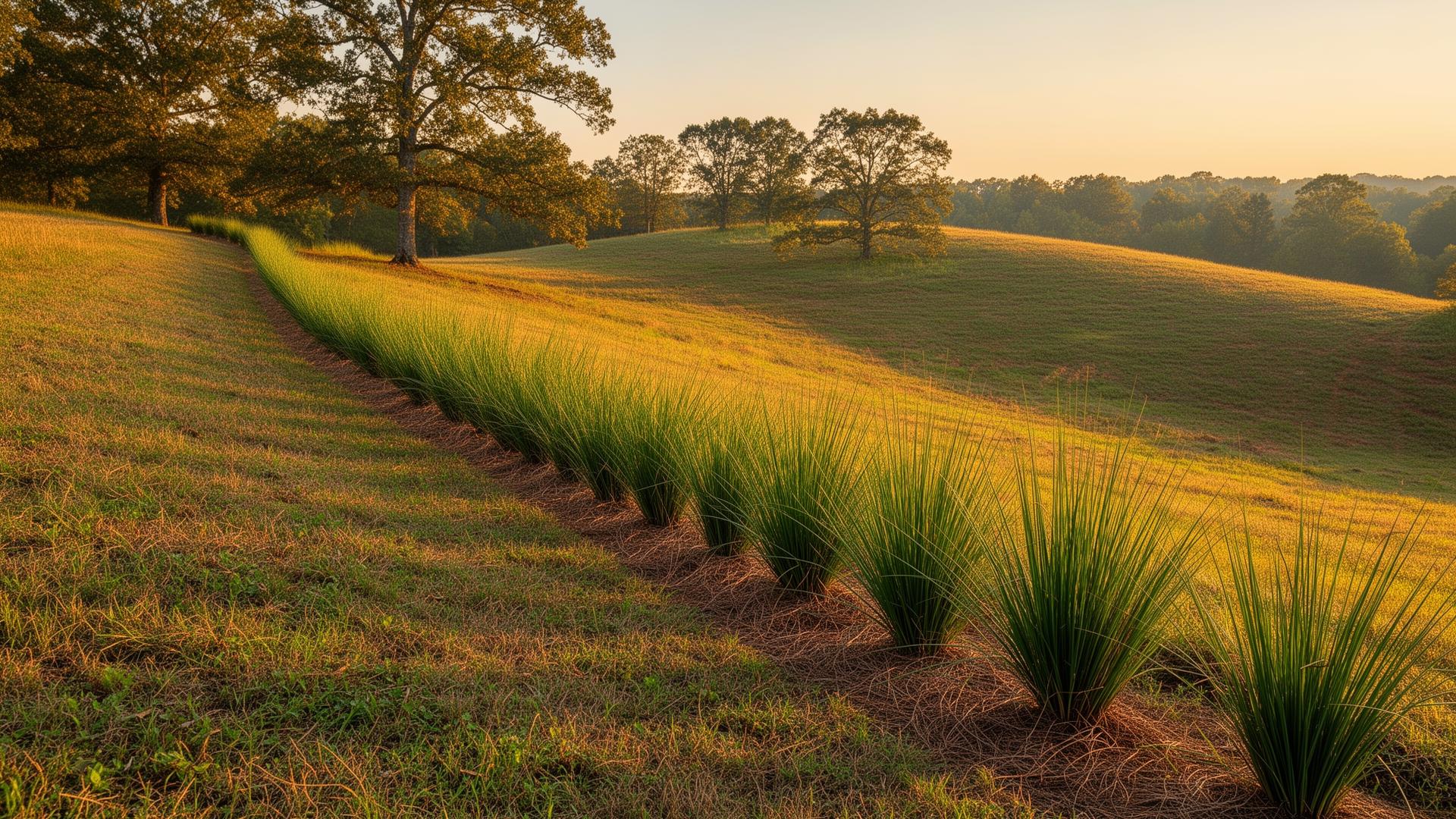
Why California slopes fail — and how vetiver hedges hold them
Steep grades, decomposed-granite soils
California's coastal and inland slopes are notoriously prone to creep, slip failures, and gully cutting. Vetiver's 10-foot root mass holds soil in place where surface mulches and hydroseed wash off.
Fire-resilient regrowth
Vetiver crowns survive ground-level burns and resprout from the base. After the 2017–2020 wildfire seasons, post-fire slope plantings established faster than reseeded native grasses.
Drought-tolerant once established
After the first summer, vetiver gets by on California rainfall alone. No drip line. No reseeding. Lower maintenance than hydromulch over a 5-year horizon.
Engineered spacing for slope angle
Hedges on 6-inch centers, vertical row spacing matched to slope gradient (3–5 feet of fall per row on steeper grades). Standard CA grading-contractor practice.
Spacing & install on California grades
On standard California fill slopes (2:1 to 1.5:1), run hedges on contour at 6-inch spacing within the row, with rows separated vertically by 3–5 feet of fall. Steeper grades get tighter row spacing.
Plant in the cool wet season (October through March in most of California) so plants establish before summer drought. Hydromulch or jute netting between hedges is compatible — vetiver pushes through both.
Bare-root slips ship banded in bundles of 50 and 100. Most slope projects order in lots of 1,000 to 10,000 — we ship pallets to grading contractors across the state.