Erosion control
Vetiver for erosion control hedges
A living hedge that holds soil better than silt fence and outlasts riprap by decades. Bulk bare-root slips shipped from our Georgia farm for projects of every size.
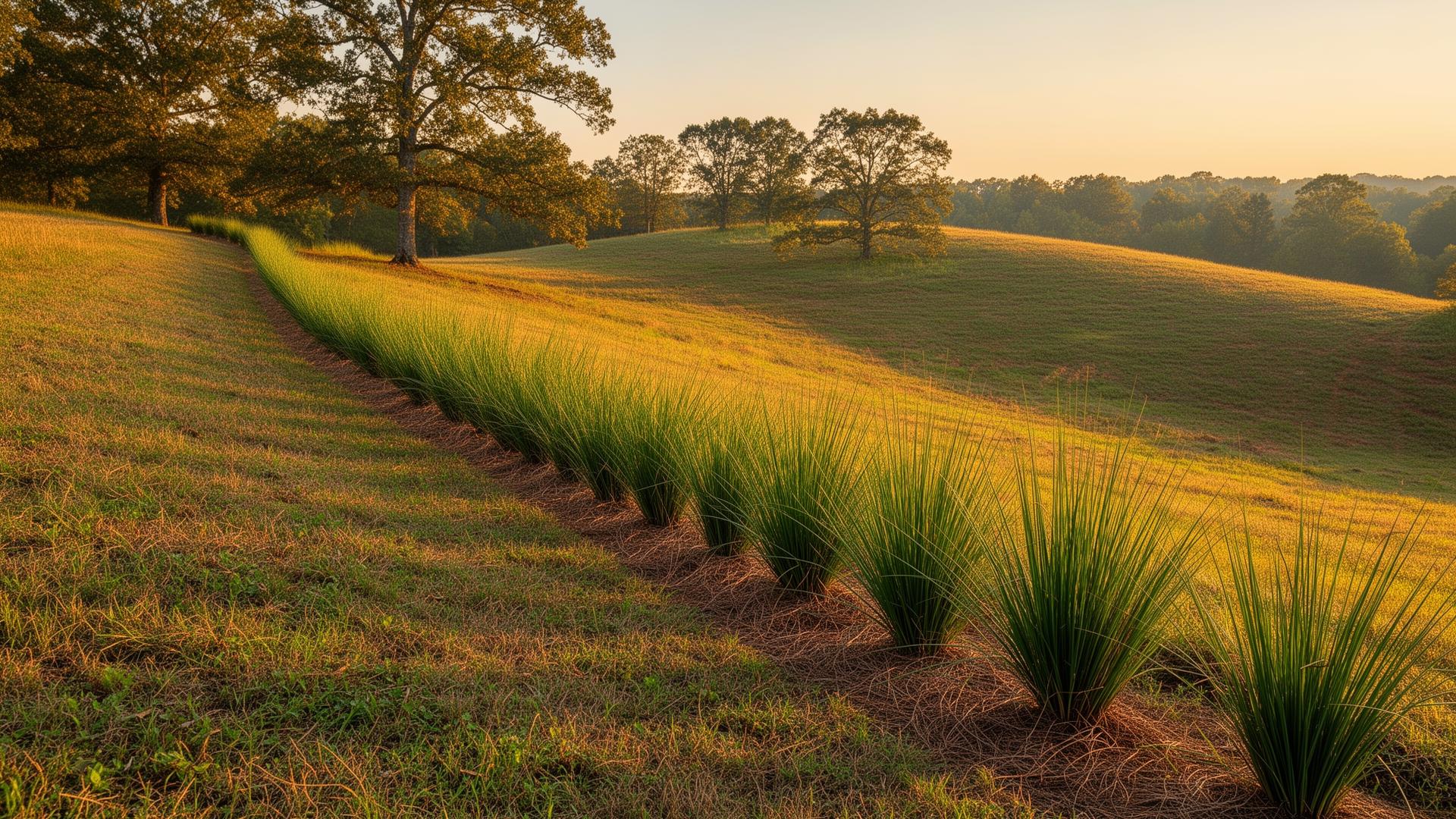
How vetiver hedges hold soil
10-foot root mat
Vetiver roots grow straight down 10–12 feet within two seasons, knitting soil into a single mass that resists creep, slip, and gully cutting.
Engineered spacing
6-inch spacing within the row, vertical row spacing matched to slope gradient. Closes into a continuous hedge by the end of season two.
Permanent in year three
Unlike silt fence (rated for one season) or hydromulch (one to two years), a vetiver hedge becomes permanent infrastructure that needs no replacement.
Lower lifetime cost
Higher install cost than mulch or fence. Lower 5-year cost once you factor in re-installs, sediment removal, and failed patches.
Year-by-year expectations
Year 1
Establishment
Slips reach 2–4 feet tall, roots 3–6 feet deep. Hedge looks open — that's normal. Hand-weed between clumps.
Year 2
Closure
Clumps double in diameter, hedge closes into a continuous wall. Roots reach 8–10 feet. Sediment starts accumulating on the upslope side.
Year 3+
Permanent
Hedge is mature infrastructure. Optional late-winter trim to 12–18 inches. Lifespan measured in decades.