Applications · Water quality
Vetiver hedges for Florida nutrient runoff & water quality.
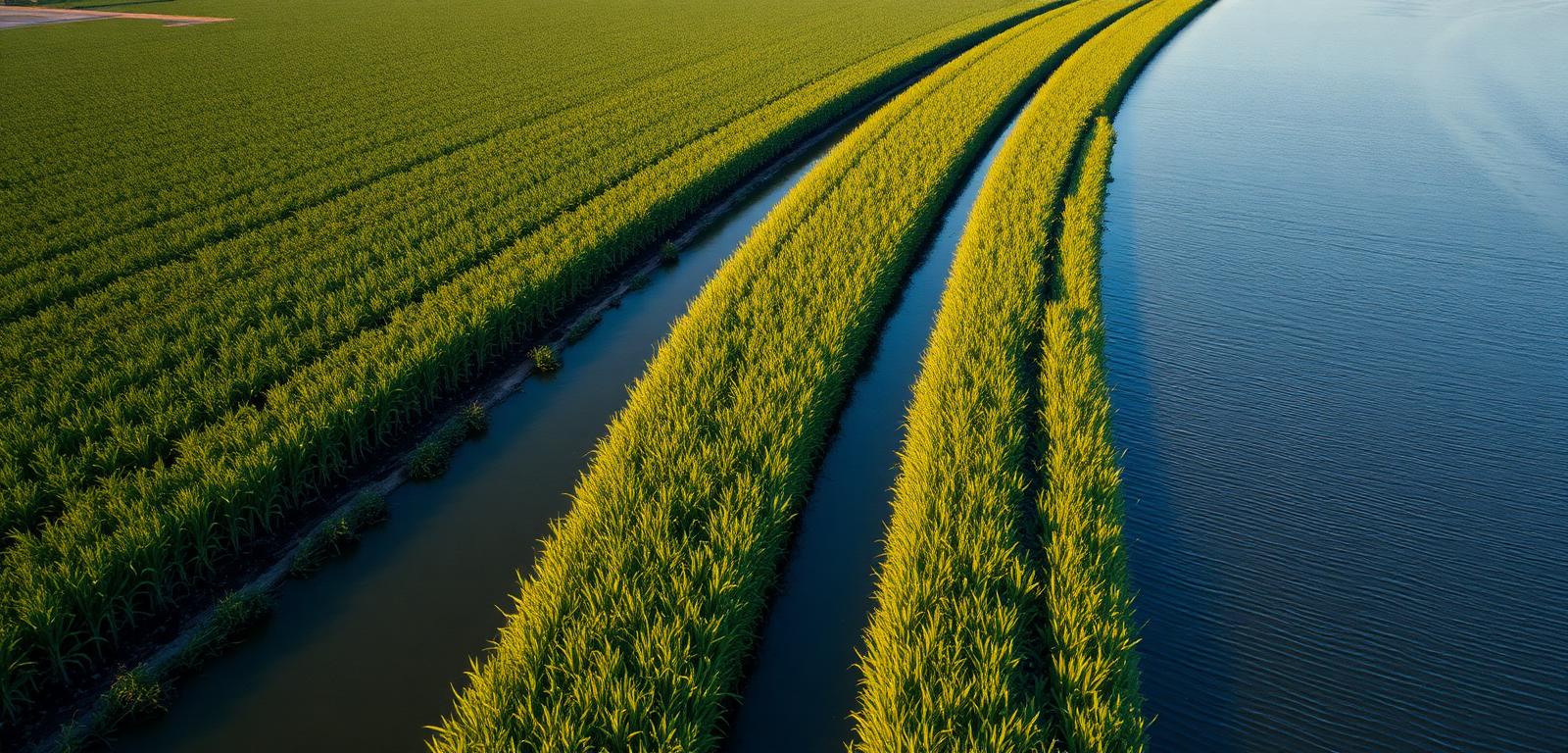
Bare-root vetiver slips for agricultural canals, stormwater swales, septic drainfield buffers, and contour plantings — shipped from a Georgia farm to projects across the Southeast, Puerto Rico, and the USVI.
The problem
Florida's springs, lagoons, and lakes are nitrogen and phosphorus impaired.
The Indian River Lagoon, the Suwannee and Santa Fe spring systems, Lake Okeechobee, and the estuaries on both coasts all carry too much dissolved nitrogen and phosphorus — from agriculture, urban stormwater, and septic systems. Conventional vegetated buffer strips need 25–100 feet of width to work, and most sites simply don't have it. Engineered bioswales work but cost tens of thousands of dollars for a few hundred linear feet.
A single row of vetiver — planted 6 to 8 inches apart along the path of runoff — gives you a 10-foot-deep root filter in 1 to 3 feet of ground space, at roughly $1.50–$3.00 per linear foot in plant material. The above-ground stems slow water and drop sediment; the root mat pulls dissolved nutrients. Documented removal rates run 60–90% for N and P in mature installations.
Where it fits
Four installations that consistently pencil out.
Agricultural canals & ditches
A single row along the top of bank holds the soil and pulls dissolved N and P before runoff reaches the channel. Used in citrus, sugarcane, dairy, and row-crop operations across central and south Florida.
1.5–2 slips per linear foot
Stormwater swales & outfalls
Double-staggered hedges in subdivision swales and below outfall pipes give runoff residence time against a 10-foot root mat. Documented 60–85% nitrogen removal in mature plantings.
Double row, 18-inch offset
Septic drainfield buffers
Planted 10–20 feet downslope of a drainfield in sandy soils, vetiver intercepts the nutrient plume moving laterally through the profile. Augments — does not replace — an advanced treatment unit.
Single dense row downslope
Contour lines on rolling land
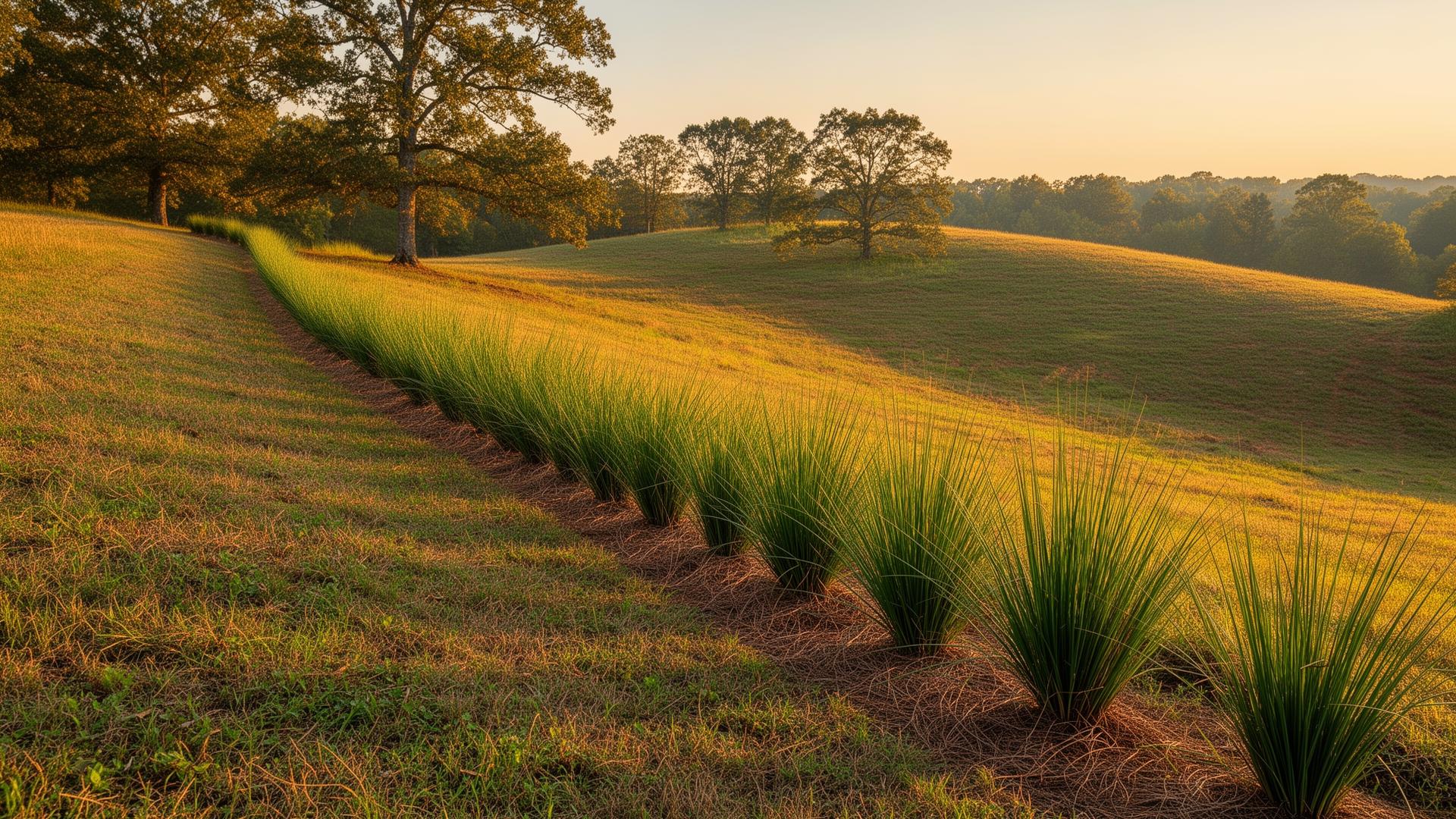
Thin green lines across citrus groves and pastures intercept sheet flow and gully erosion. Once established, maintenance drops to one cut-back per year.
On-contour, every 20–40 vertical ft
Project sizing
How many slips will you need?
These are working estimates we use when scoping projects. Final counts depend on slope, soil, and whether you want a single or double row. Send us the dimensions and we'll come back with a real number and a delivery window.
| 100-ft canal edge (small farm) | 150–200 |
| 1,000-ft canal edge | 1,500–2,000 |
| Subdivision outfall (1 acre catchment) | 500–800 |
| Single septic drainfield buffer | 60–120 |
| 10-acre citrus contour planting | 3,000–5,000 |
What you're buying
Field-grown, sterile, and shipped bare-root.
- Sterile commercial cultivar — non-invasive, USDA-approved, listed nowhere as a noxious weed.
- Bare-root slips: no soil, no pots, no shipping weight overhead.
- Plants thrive in USDA zones 8–11 with brief tolerance to zone 7 with mulch.
- Tolerates clay, sand, drought, periodic flooding, and moderately brackish water.
- Bulk pricing kicks in past 500 slips; substantial discounts past 5,000.
Read more
The background reading
Scoping a Florida runoff or septic project?
Send us the dimensions and timeline. We'll come back with a slip count, a delivery window, and bulk pricing for your state.