Erosion · 4 min read
Erosion Control with Vetiver Hedges
Why a living vetiver hedge outperforms silt fences, hay bales, and most engineered solutions — and how to plant one.
The problem with conventional erosion control
Silt fences fail. Hay bales rot. Riprap is expensive and ugly. Even a well-designed swale eventually fills in.
A vetiver hedge does something different: it gets better every year.
How it works
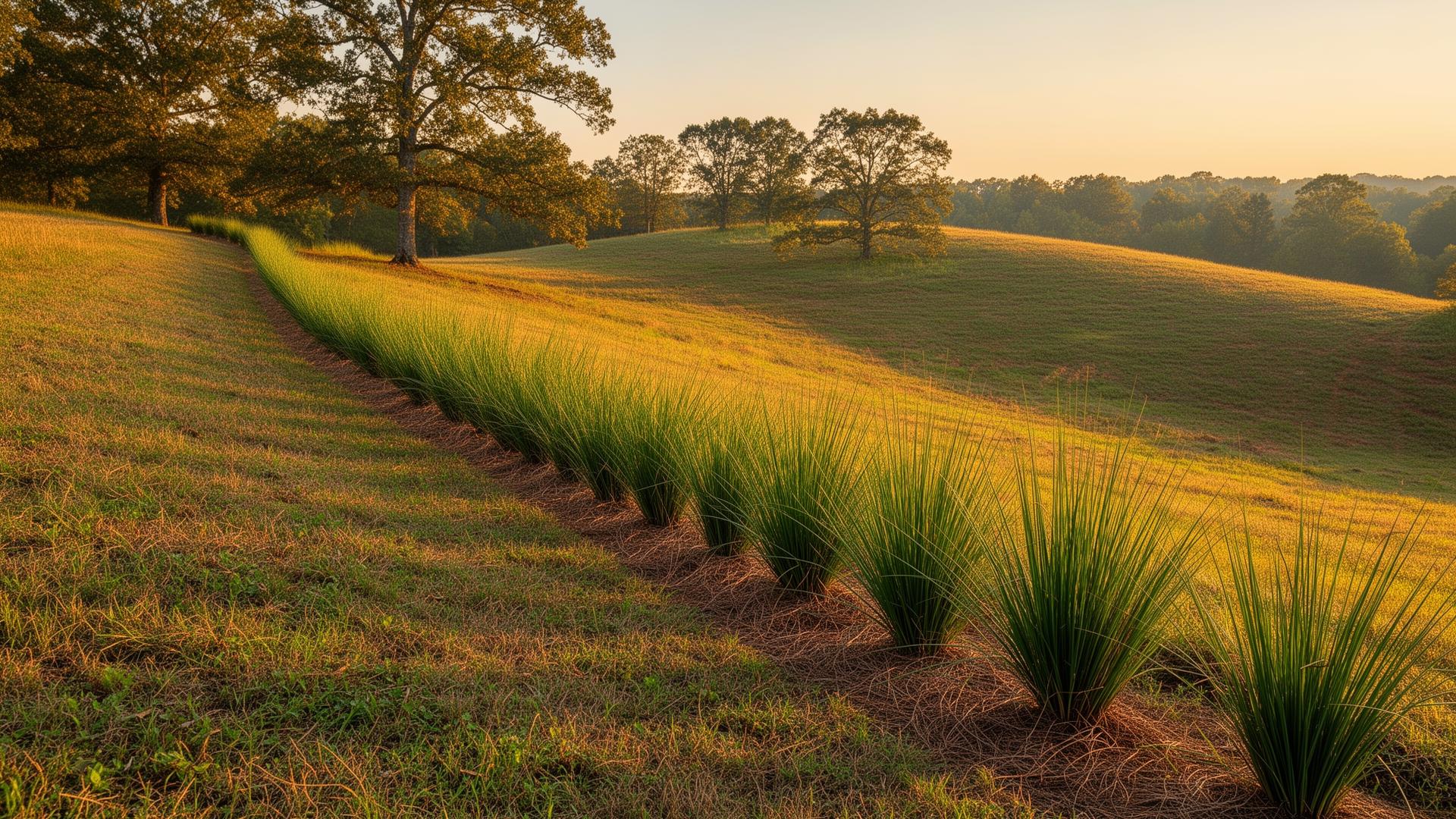
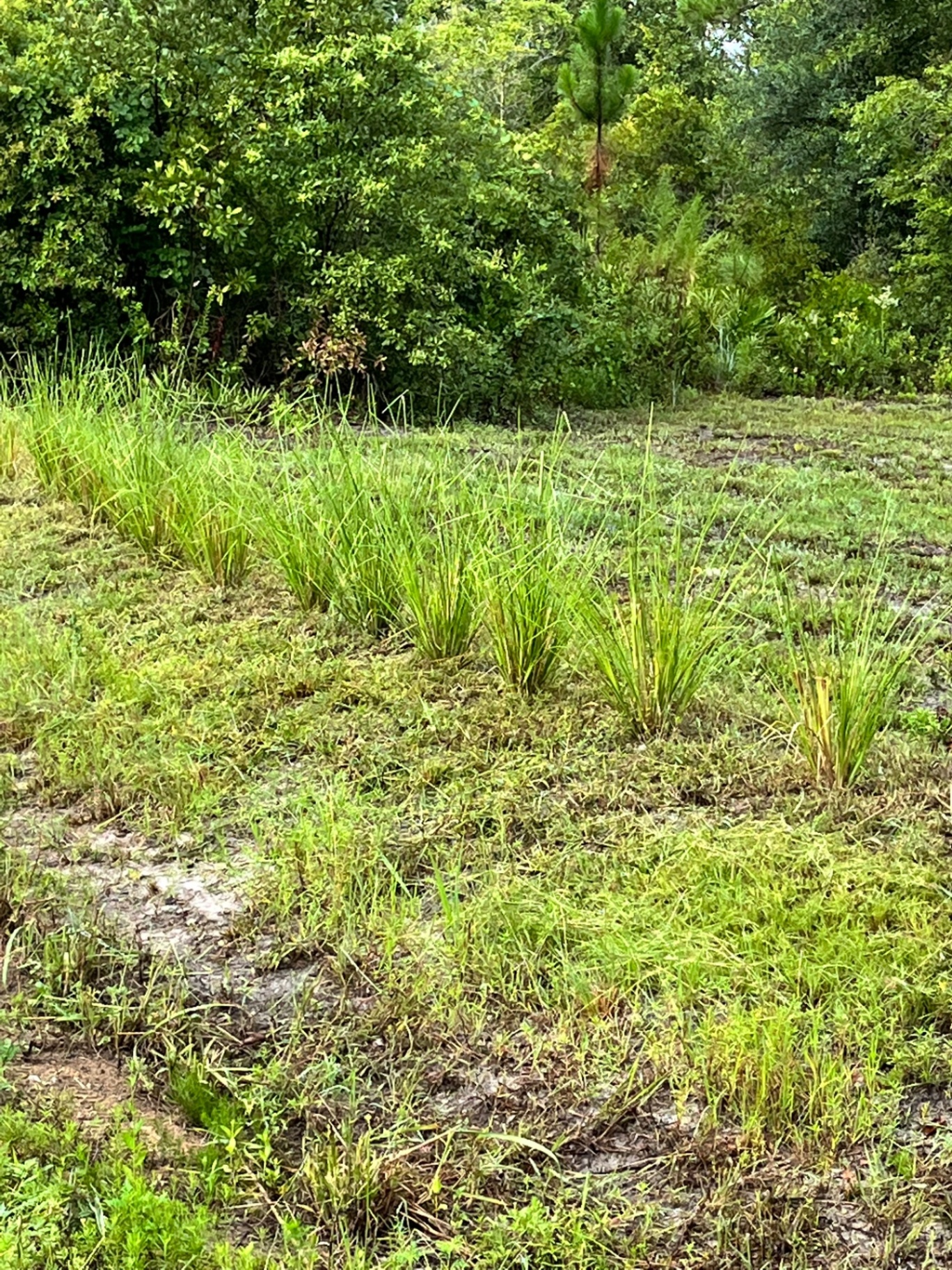
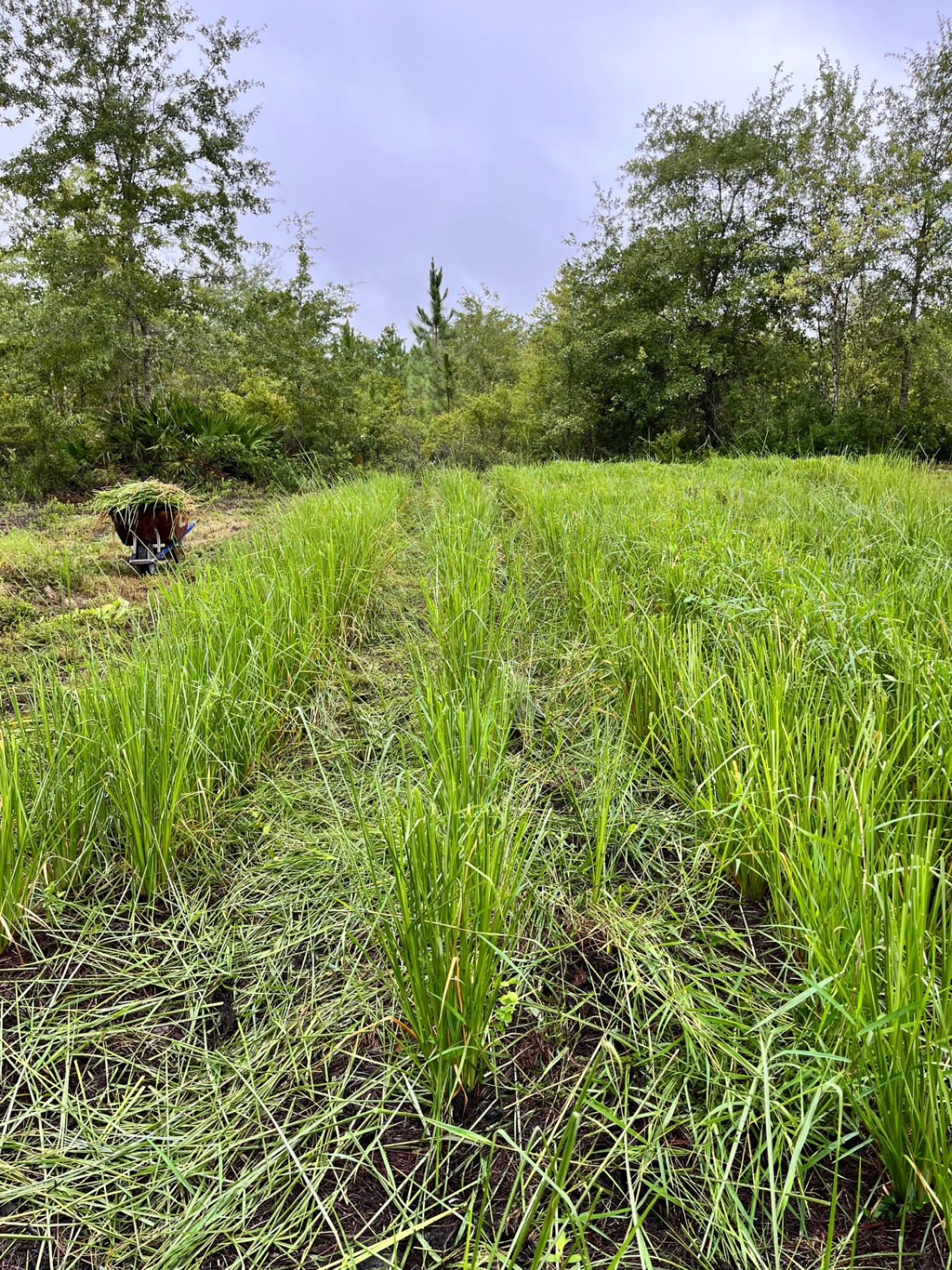
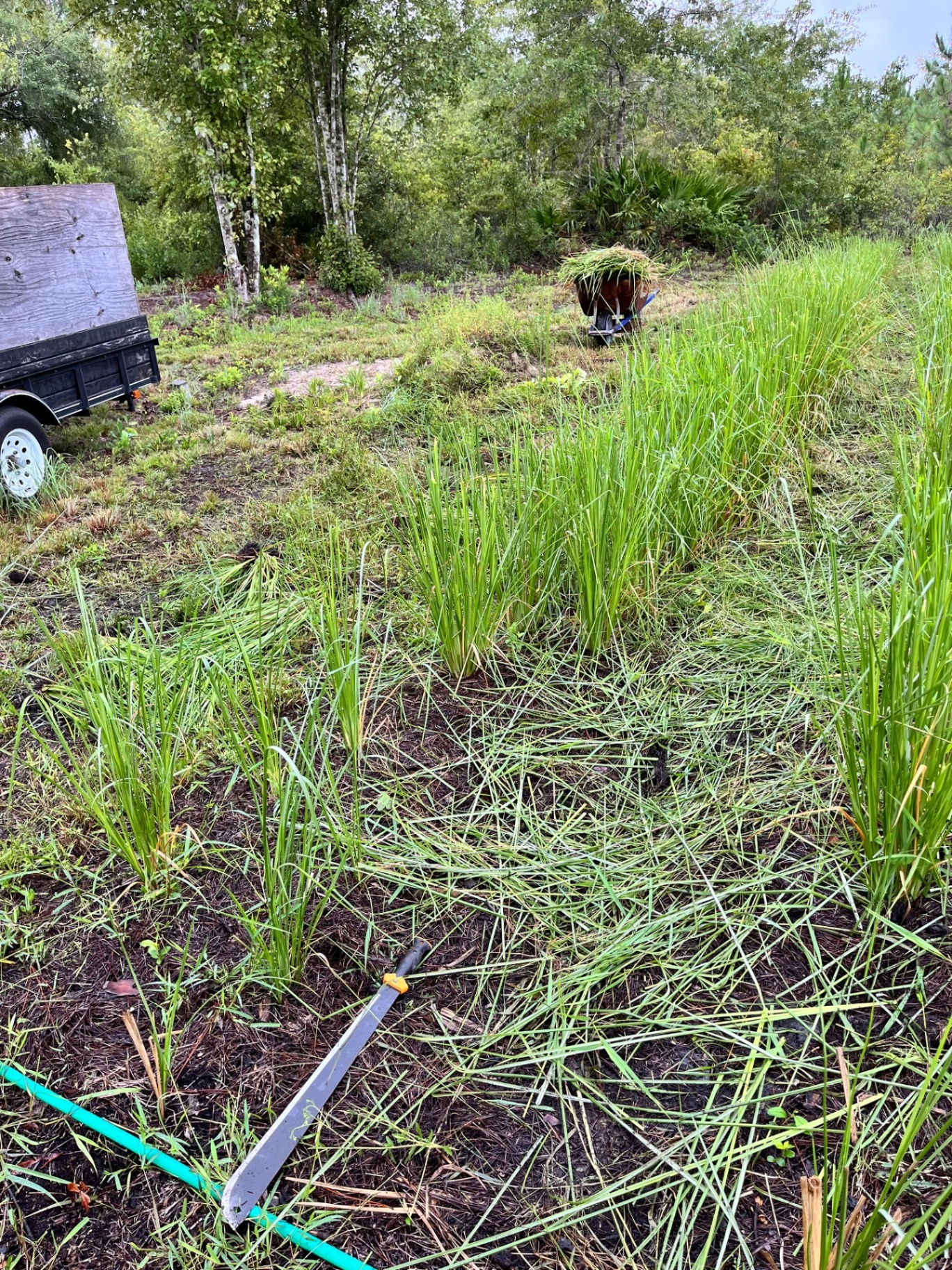
Vetiver planted close together — about 8 inches on center — forms a dense barrier of stiff, upright stems at ground level. When water runs downhill into the hedge:
- The stems slow the water down.
- Sediment drops out and accumulates on the uphill side.
- The water filters through the hedge cleanly.
Over a few seasons, the accumulated sediment behind the hedge becomes a natural terrace. Your slope literally rebuilds itself.
Where it works
- Roadside cuts and embankments
- Stream banks and pond edges
- Construction sites (especially long-term restoration)
- Pasture contour lines on rolling land
- Backyard slopes you're tired of mowing
What it costs
A single row of vetiver covers about 1.25 linear feet per slip. For 100 feet of hedge, you need roughly 100–125 slips — a one-time cost that replaces years of recurring silt-fence repairs.
For large projects, our wholesale page lists bulk pricing.
Further reading
The Vetiver Network International (TVN) maintains the global archive of vetiver-system case studies, engineering specs, and research from agencies and universities on six continents — the deepest free resource on the technique anywhere.
Frequently asked questions
Does vetiver actually stop erosion?
Yes. Vetiver hedges are the global standard for living-barrier erosion control, used by the USDA, the World Bank, and restoration crews on six continents. The dense ground-level stems slow runoff and drop sediment; over a few seasons the hedge builds a natural terrace.
How many vetiver slips do I need per linear foot?
Roughly one slip every 8–10 inches in a single row, which works out to about one slip per 1.25 linear feet. A 100-foot hedge needs 100–125 slips.
How long does a vetiver erosion hedge last?
Indefinitely. Mature vetiver clumps live for decades, and the hedge actually performs better each year as the root system deepens and the above-ground stem density increases.