Remediation · 6 min read
Vetiver for Nutrient Runoff in Florida: A Practical Guide
Why Florida's springs, lagoons, and Lake Okeechobee have a nitrogen and phosphorus problem — and how vetiver hedges along ditches, canals, and drainfields can help.
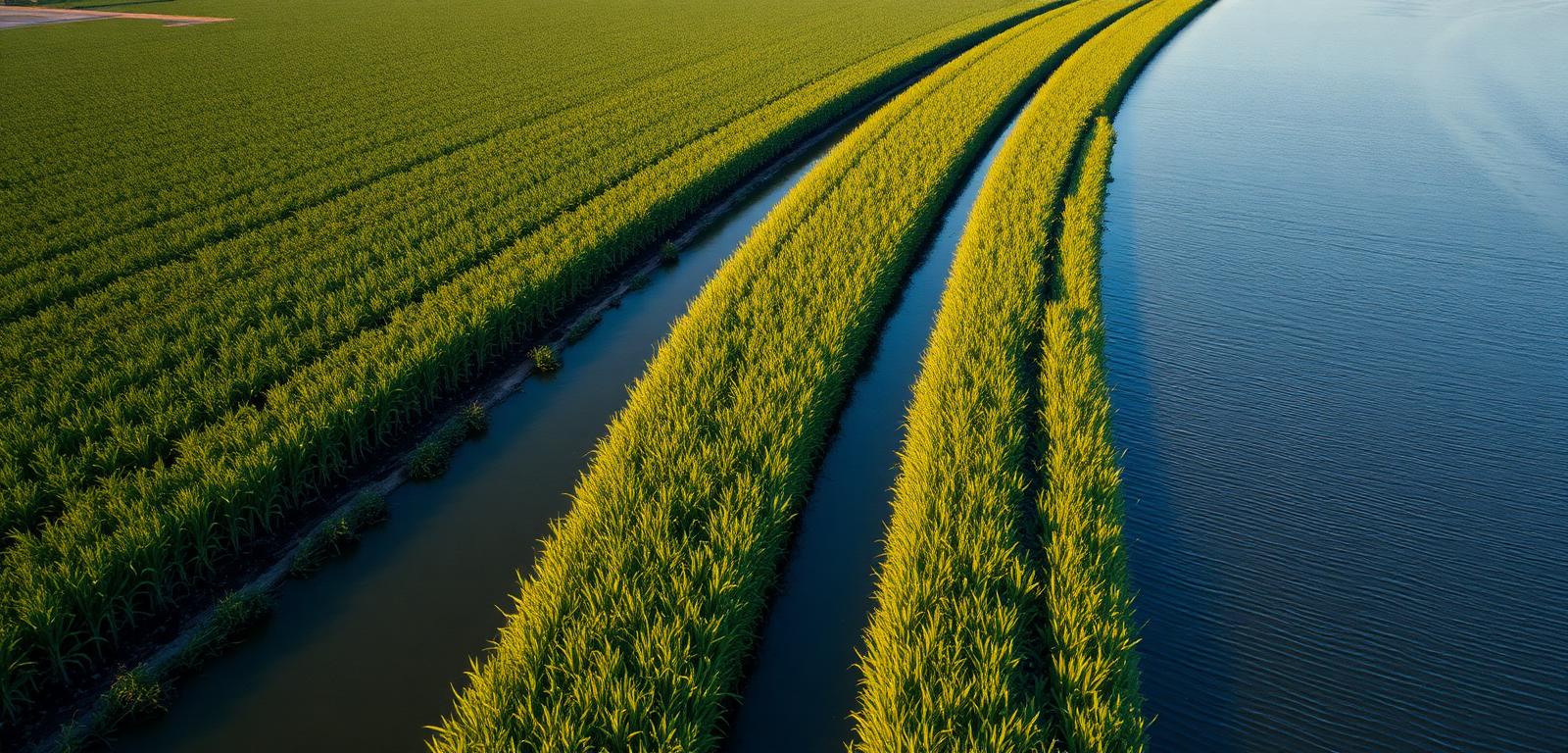
Florida has a nutrient problem, and most of the state knows it. The Indian River Lagoon, the springs of the Suwannee and Santa Fe basins, Lake Okeechobee, and the estuaries on both coasts are all impaired by excess nitrogen and phosphorus — much of it from agriculture, stormwater, and septic systems leaching slowly into surface water.
Vetiver hedges, planted along the right places, are one of the few low-cost, low-maintenance tools that genuinely move the needle on this. Here's where they fit.
Where the nutrients come from
Florida's nutrient loading roughly breaks down to:
- Agriculture — citrus, sugarcane, row crops, dairy. Fertilizer that doesn't get taken up by the crop moves with rain into ditches, canals, and ultimately the receiving waterbody.
- Urban stormwater — lawn fertilizer, pet waste, leaking sewer infrastructure. Concentrated in subdivision outfalls and golf course drainage.
- Septic systems — much of rural Florida (and a surprising amount of suburban Florida) is on septic. In high-water-table sandy soils, septic drainfield effluent moves laterally and reaches surface water faster than most people realize.
- Legacy phosphorus — decades of fertilizer already in the soil profile, slowly remobilizing.
A vetiver hedge can't fix all of these, but it intercepts the dissolved and sediment-bound fraction at the point where it's about to enter open water — which is often the only point where it's economically practical to do anything.
The four installations that actually work in Florida
1. Ditch and canal edges on farms
A single row of vetiver slips planted 6–8 inches apart along the top of bank of a farm ditch or canal will:
- Hold the bank against the kind of slumping that puts sediment (and bound phosphorus) directly into the water.
- Filter runoff sheeting off the field before it drops into the channel.
- Reduce maintenance dredging — most Florida farm ditches need to be re-dug every few years, and a stable vetiver edge dramatically slows that.
For a 1,000-foot canal edge, plan on roughly 1,500–2,000 slips. That's a one-time cost in the low thousands of dollars that replaces ongoing bank-stabilization work.
2. Stormwater swales and outfalls
Subdivisions, golf courses, and commercial sites in Florida are built around retention swales and outfall pipes. Planting a double-staggered vetiver hedge at the bottom of a swale, or fanning out below an outfall pipe, gives the runoff residence time against the root mat. Documented removal rates run 60–85% of dissolved N and 70–90% of P in well-designed installations.
3. Septic drainfield edges
This is the underused application in Florida. Below a septic drainfield, especially on the sandy soils of the central ridge and the coast, a vetiver hedge planted 10–20 feet downslope of the drainfield intercepts the nutrient plume moving laterally through the soil profile. The deep root system reaches the depth where the plume actually moves — most other "buffer" plants don't.
Important: vetiver doesn't replace a properly designed advanced treatment unit. It's a secondary line of defense for the dissolved nutrients that always escape a conventional drainfield.
4. Citrus grove and pasture contour lines
On rolling land in central Florida (the ridge running from Lake County south through Polk and Highlands), vetiver hedges planted on contour intercept both sheet flow and gully erosion. The visual is striking — a thin green line across a grove — and the maintenance is essentially zero once established.
Florida-specific growing notes
- Plant late spring through early fall. Soil and water are warm; establishment is fast.
- Saline tolerance matters on the coasts. Vetiver handles moderately brackish water but full salt-marsh conditions are too much; pair with native Spartina or Sporobolus in those situations.
- Hurricane season — established vetiver hedges hold up to 100+ mph wind. Newer plantings (under 6 months) should be flagged for visual identification before storm season.
- Burrowing animals — armadillos and feral hogs occasionally root in established hedges. Damage is cosmetic; the plants recover. Wild hogs can be a real problem in rural areas, and a vetiver hedge is sometimes the canary in the coal mine.
How much does a Florida nutrient-runoff project cost?
A useful rule of thumb: $1.50–$3.00 per linear foot of finished hedge, materials only (we ship bare-root slips; the planting labor is usually a half day for a 1,000-foot project with two people). Compare that to the USDA NRCS cost-share rates for conventional vegetated buffers, and most projects pencil out without external funding.
For larger projects — county BMP programs, multi-grove operations, golf course chains — bulk pricing kicks in past 5,000 slips. The wholesale form is on our wholesale page, or you can start a project conversation directly.
Further reading
The technical literature on vetiver in Florida is maintained by the Vetiver Network International and includes case studies from the South Florida Water Management District, the University of Florida IFAS extension, and several private growers. Our phytoremediation primer is the broader scientific context.
Frequently asked questions
Does vetiver reduce nutrient runoff into Florida waterways?
Yes. Vetiver hedges planted along farm ditches, stormwater swales, and septic drainfield edges have documented removal rates of 60–90% for dissolved nitrogen and phosphorus before runoff reaches receiving waterbodies. It's one of the most cost-effective tools available for reducing nutrient loading to Florida springs, lagoons, and lakes.
Can vetiver be planted near septic drainfields?
Yes — and Florida's sandy, high-water-table soils make it one of the highest-value uses. A vetiver hedge planted 10–20 feet downslope of a drainfield intercepts the nutrient plume moving laterally through the soil. It augments, but does not replace, a properly designed septic system.
How many vetiver slips do I need for a Florida canal edge?
Plan on roughly 1.5–2 slips per linear foot for a single row planted 6–8 inches apart. A 1,000-foot canal edge needs 1,500–2,000 slips. Larger projects qualify for wholesale pricing.
Is vetiver legal to plant in Florida?
Yes. The commercial sterile cultivar of vetiver is not listed as invasive or noxious in Florida and is actively used by water management districts and the USDA NRCS for erosion control and water quality projects.