Remediation · 5 min read
Vetiver Hedge vs Bioswale vs Vegetated Buffer Strip: Which Should You Use?
An honest comparison of three runoff-control techniques — vetiver hedges, engineered bioswales, and conventional buffer strips — covering cost, performance, and maintenance.
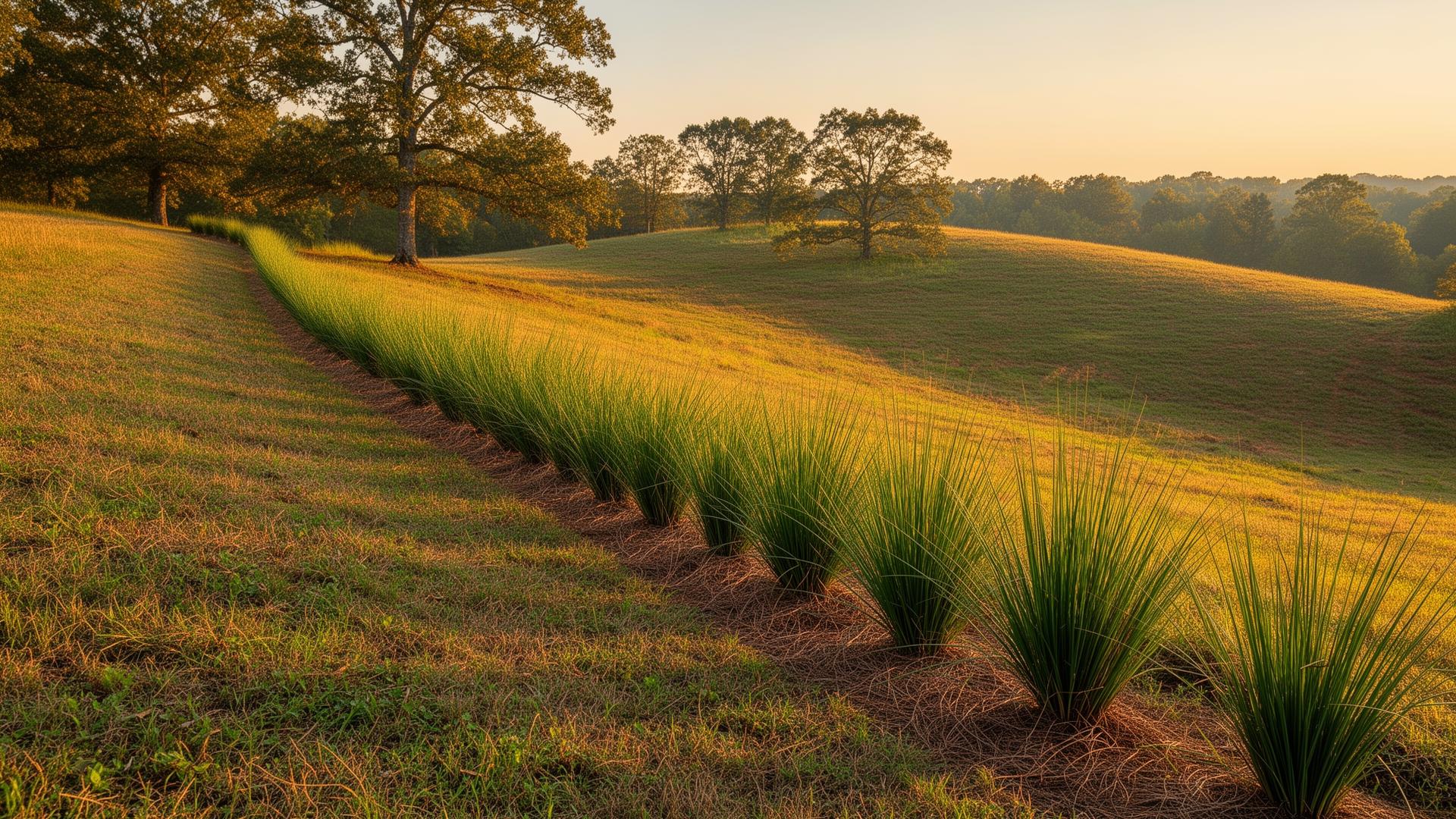
If you're trying to keep nutrients, sediment, or pollutants out of a waterway, you have three mainstream options: a conventional vegetated buffer strip, an engineered bioswale, or a vetiver hedge. They look similar to the casual eye and they all "filter runoff," but they perform very differently, cost very different amounts, and need very different maintenance regimes.
Here's the honest comparison.
At a glance
| Feature | Vegetated buffer strip | Bioswale | Vetiver hedge |
|---|---|---|---|
| Footprint | 25–100 ft wide | 4–15 ft wide | 1–3 ft wide |
| Installation cost | Low–medium | High (engineered) | Low |
| Root depth | 6–24 inches | 1–4 ft | 10–12 ft |
| N & P removal | 30–60% | 50–80% | 60–90% (mature) |
| Sediment trapping | Moderate | High | Very high |
| Establishment time | 1–3 years | 1 season | 1 season |
| Annual maintenance | Mowing, reseeding | Mulch, weeding, replanting | One cut-back |
| Lifespan | 10–20 years | 15–25 years | 30+ years |
| Performs under flood | Poor (washes out) | Medium | Excellent |
Vegetated buffer strips
What they are: a band of grass, shrubs, or trees along a waterbody, designed to filter sheet flow before it reaches the water. The USDA NRCS has been promoting them since the 1980s.
Where they shine: large agricultural landscapes where you have plenty of room to give up. A 50-foot grass buffer along a 2,000-foot field edge does real work.
Where they fail: anywhere space is tight. The performance numbers fall off a cliff when the buffer drops below 25 feet wide, and most of the developed Florida coast simply doesn't have that kind of room. They also wash out in extreme storms, which (in Florida) means every other year.
Bioswales
What they are: engineered channels with a designed soil profile (often sand over compost over native soil), specific slope and ponding characteristics, and a plant palette chosen for the site. Common in commercial and municipal stormwater design.
Where they shine: controlled urban environments — parking lots, road shoulders, plaza drainage. The engineering is reproducible and the performance is reliable.
Where they fail: cost. A 200-foot bioswale runs $20,000–$80,000 installed depending on permitting, soil work, and plant selection. The "soft" maintenance also adds up: mulch replacement, weeding, and replanting failed sections are perpetual line items.
Vetiver hedges
What they are: a single (or double) row of clumping grass slips planted 6–8 inches apart, forming a dense above-ground stem barrier and a 10-foot root mat.
Where they shine: linear interception across the path of runoff, in tight spaces, on a small budget. A vetiver hedge along the same 200-foot canal edge that a bioswale would cost $20K+ to engineer runs $300–$600 in slips and a half day of labor. And the root depth gives it filtering reach that buffer strips and most bioswales simply can't match.
Where they fall short: vetiver is not a complete stormwater treatment train on its own. For sites with hydrocarbon contamination, regulatory requirements for engineered retention, or freezing winters, you need additional infrastructure. And it takes one full season to reach mature performance — a brand-new hedge filters less than a mature buffer strip.
How to choose
Rough decision tree for a Florida or warm-climate site:
- You have 50+ feet of room along a field edge and patient timelines? → Vegetated buffer strip is fine, and qualifies for NRCS cost share.
- Urban commercial site with regulatory stormwater treatment requirements? → Engineered bioswale, often required by code.
- Linear waterway edge with tight space and a budget? → Vetiver hedge, every time. Or combine: a 25-foot grass buffer with a vetiver hedge at the waterway edge gives you both width and a deep-rooted final filter.
- Septic drainfield, dairy lagoon, mine tailings edge? → Vetiver. The deep root system is the only one of the three that reaches the depth where contaminants actually move.
The three approaches aren't mutually exclusive — the best stormwater designs we've seen combine all three, with a vetiver hedge at the most critical interception line. If you want to talk through a specific project, our water-quality applications page walks through sizing and pricing.
Further reading
The Vetiver Network International maintains case studies comparing vetiver hedges to conventional bioengineering approaches across six continents — useful reading if you're scoping a project and want comparison numbers from an agency context.
Frequently asked questions
Is a vetiver hedge better than a bioswale?
It depends on the site. Bioswales are engineered systems often required by code in urban commercial development. Vetiver hedges cost a fraction of a bioswale and reach 10 feet deep into the soil profile, which makes them better for linear interception in tight spaces and along agricultural canals. The two approaches are often combined in well-designed stormwater plans.
Can vetiver replace a vegetated buffer strip?
Vetiver replaces a buffer strip when space is tight — a 2-foot vetiver hedge can outperform a 25-foot buffer strip for sediment capture and dissolved-nutrient removal. On large agricultural sites with room for a wide buffer, the two can be combined: a grass buffer for width, vetiver at the waterway edge for depth.
How much does a vetiver runoff project cost?
Roughly $1.50–$3.00 per linear foot of finished hedge for plant material, with planting labor adding a similar amount for a typical installation. A 1,000-foot canal edge runs in the low thousands of dollars total — substantially less than an engineered bioswale of equivalent length.