Basics · 3 min read
Is Vetiver Invasive? The Non-Invasive Cultivar Explained
Short answer: no. The commercial vetiver sold for landscaping and erosion control is a sterile, clump-forming cultivar that doesn't seed and doesn't spread.
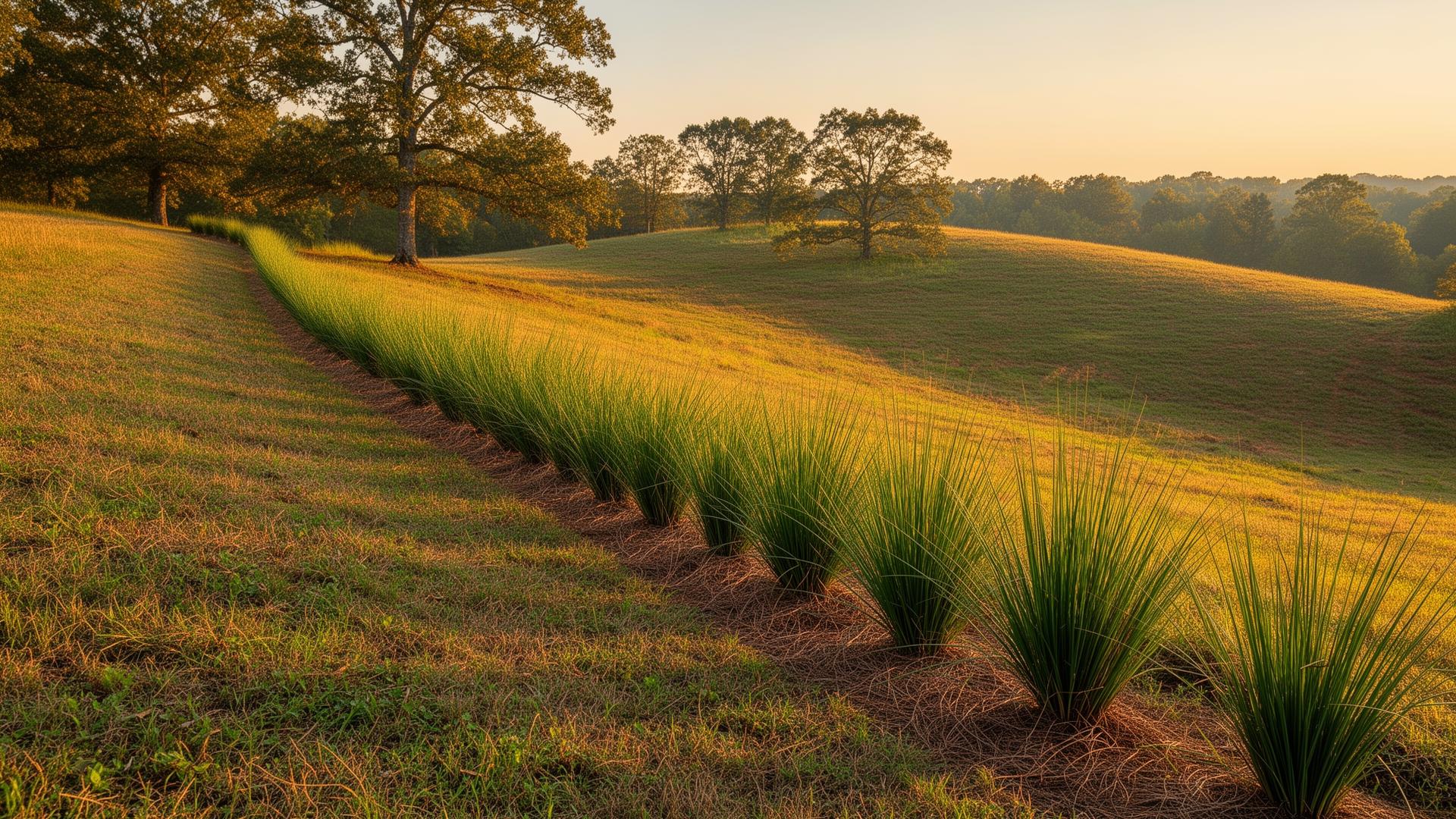
Short answer: no. The vetiver grown commercially in the United States for landscaping and erosion control is a sterile, clump-forming cultivar. It does not produce viable seed, and it does not spread by underground runners. A clump you plant today will be in exactly the same spot, just larger, in ten years.
This is the single most common question we get, and it's a fair one — "tropical grass that's used for erosion control" sounds exactly like the description of a noxious weed. So here's the real story.
Two kinds of vetiver exist
Botanically, Chrysopogon zizanioides has two main genetic groups:
- North Indian vetiver — wild, fertile, sets viable seed. Found growing wild in parts of South Asia. This is not what's sold commercially anywhere in the world.
- South Indian "Sunshine" cultivar — sterile, clump-forming, genetically near-identical from plant to plant. This is what every reputable nursery, erosion control supplier, and farm sells — including us.
The sterile cultivar has been the global standard for landscape and erosion use since the 1980s, when the World Bank's vetiver program standardized on it specifically because of its non-invasive behavior. The Vetiver Network International (TVN) still maintains the global research and documentation on it.
How "sterile" works in practice
Vetiver does flower — you'll see slender purplish seed heads on mature clumps in late summer. But the seeds it produces are non-viable. They don't germinate. You can collect them, plant them in perfect conditions, and nothing will come up.
It also doesn't have rhizomes or stolons (the underground or above-ground runners that make grasses like Bermuda or bamboo so aggressive). It expands in place — a clump that starts at 6 inches across will be 2–3 feet across after a few years, then stop. To get more plants, you have to physically divide a clump and replant the divisions.
Why it gets confused with invasive grasses
A few non-invasive species look similar enough at a glance to cause confusion:
- Pampas grass (Cortaderia selloana) — invasive in California and parts of the South. Showy white plumes. Spreads by seed.
- Miscanthus / Chinese silver grass — invasive in parts of the Midwest and Northeast. Spreads by seed and rhizome.
- Johnson grass — actually invasive everywhere it grows. Tall, weedy, seeds aggressively.
Vetiver is visually in the same family of "tall ornamental grass," which is why people often ask. But its behavior is the opposite of those species.
Is it on any invasive species list?
No US state lists the commercial vetiver cultivar as invasive, noxious, or prohibited. It's actively planted by the US Department of Agriculture's Natural Resources Conservation Service for erosion control in the Southeast and in Puerto Rico.
The takeaway
If you're hesitating to plant vetiver because you're worried about it taking over your yard or your neighbor's pasture — don't. It's one of the most controllable ornamental grasses you can plant, specifically because someone thought to standardize on a sterile variety 40 years ago.
Frequently asked questions
Is vetiver invasive in the United States?
No. The commercial vetiver cultivar sold in the US is sterile and clump-forming. It doesn't set viable seed and doesn't spread by rhizomes. No US state lists it as invasive or noxious.
Does vetiver spread?
A single clump slowly gets larger in place — usually 2–3 feet across at maturity — and then stops. It does not send out runners or self-seed. To get more plants you have to physically divide a clump.
Can vetiver grass be grown from seed?
The commercial cultivar is sterile, so its seeds don't germinate. All vetiver sold for landscaping and erosion control is propagated by dividing mature clumps into bare-root slips.
Will vetiver take over my yard?
No. Unlike bamboo, pampas grass, or miscanthus, vetiver stays exactly where you plant it. A clump expands outward slowly and reaches a stable mature size — it doesn't run, send up volunteers, or escape into surrounding areas.