Growing · 5 min read
Growing Vetiver in the Southeast: Planting, Spacing, and Care
How to plant vetiver grass in Georgia, the Carolinas, Florida, and the Gulf Coast — spacing, watering, overwintering, and what to expect in year one.
When to plant vetiver grass
In Georgia, the Carolinas, and northern Florida, the sweet spot is late spring through early summer — once soil temperatures are reliably above 65°F. The plants need warm soil and a long growing season to settle in before their first winter.
Further south (zones 9b–11), you can plant almost any month of the year.
How to plant vetiver grass
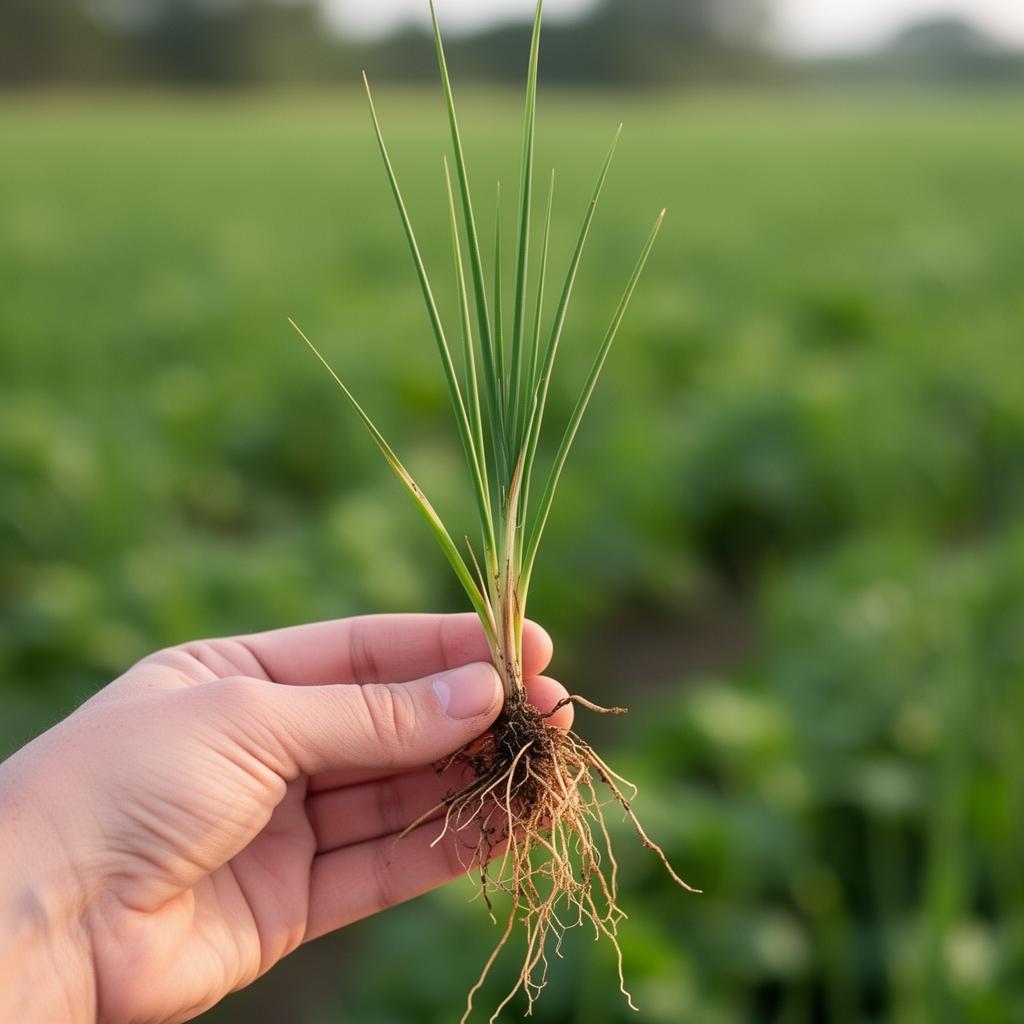
Bare-root slips arrive trimmed and ready. To plant:
- Soak the roots in a bucket of water for 1–2 hours before planting.
- Dig a hole about 6 inches deep — deeper than you think you need.
- Set the slip so the crown (where roots meet stems) sits at soil level.
- Backfill, firm the soil around the slip, and water in well.
- Trim the green tops to about 6 inches to reduce water stress while the roots establish.
Don't fertilize at planting. Vetiver doesn't need it, and fertilizer can actually slow root establishment.
Spacing
For a living hedge for erosion control, space slips 8–10 inches apart in a single row. Within a season they'll knit together into a continuous, dense barrier.
For ornamental clumps, give each plant 3–4 feet of breathing room so the mature form shows off.
For a privacy screen, 3 feet on center is the sweet spot — close enough to read as a hedge within two seasons, far enough that individual clumps still show their form.
Watering
For the first 4–6 weeks after planting, water 2–3 times a week unless you get rain. Once established, vetiver is remarkably drought-tolerant — its deep roots find their own moisture.
Sun and soil
- Full sun is best. It tolerates partial shade but won't grow as vigorously.
- Any drained soil works: sand, clay, loam, even rocky ground.
- It does not love sitting in a swamp, but it handles periodic flooding fine.
Overwintering
In zones 8 and 9, vetiver goes semi-dormant in winter. Cut the tops back to about 12 inches after the first hard frost. The roots are fully cold-hardy in zone 8 once established.
In zone 7 and colder, treat it as an annual outdoors, or grow it in a large pot you can move into a garage or greenhouse.
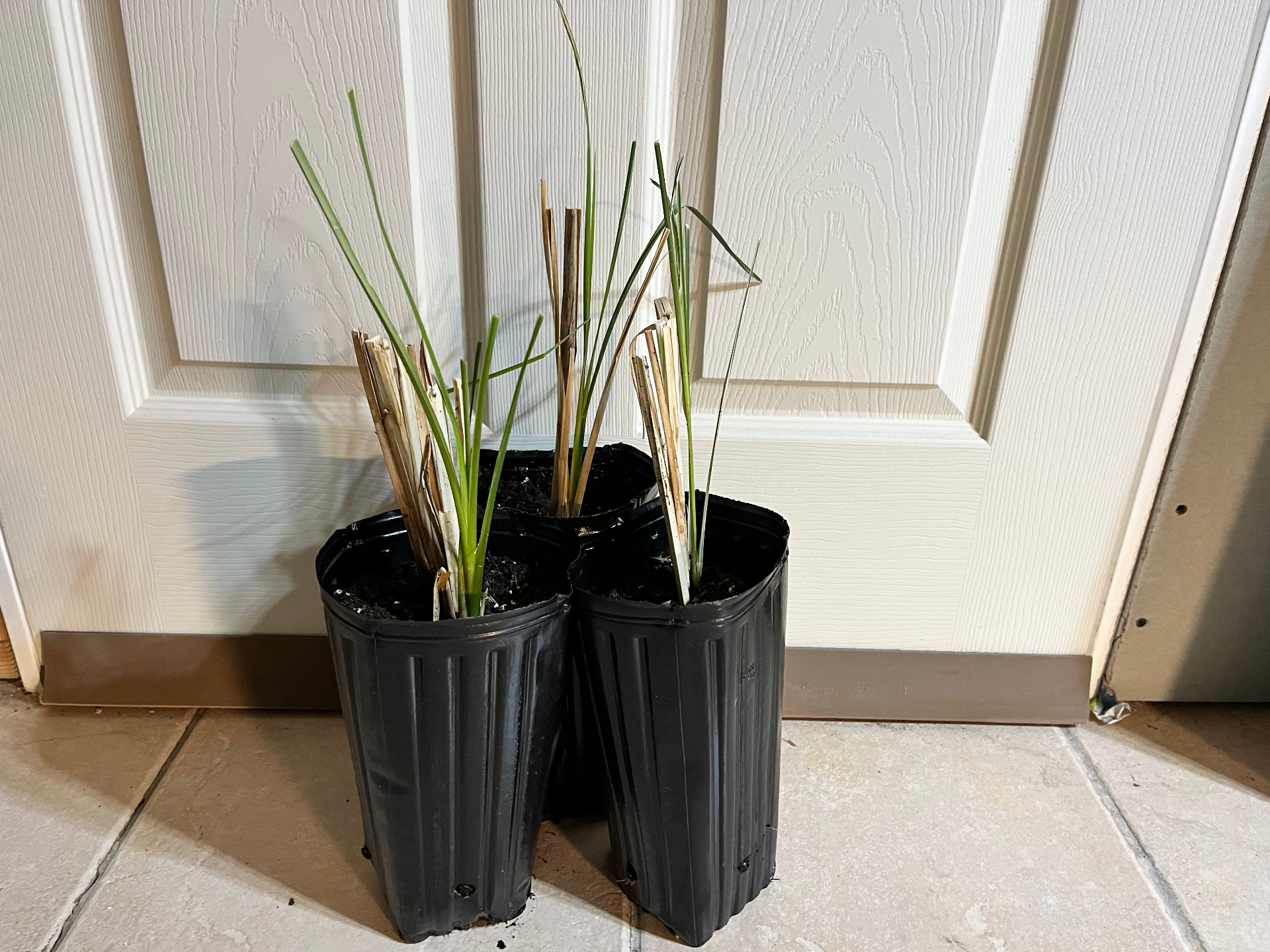
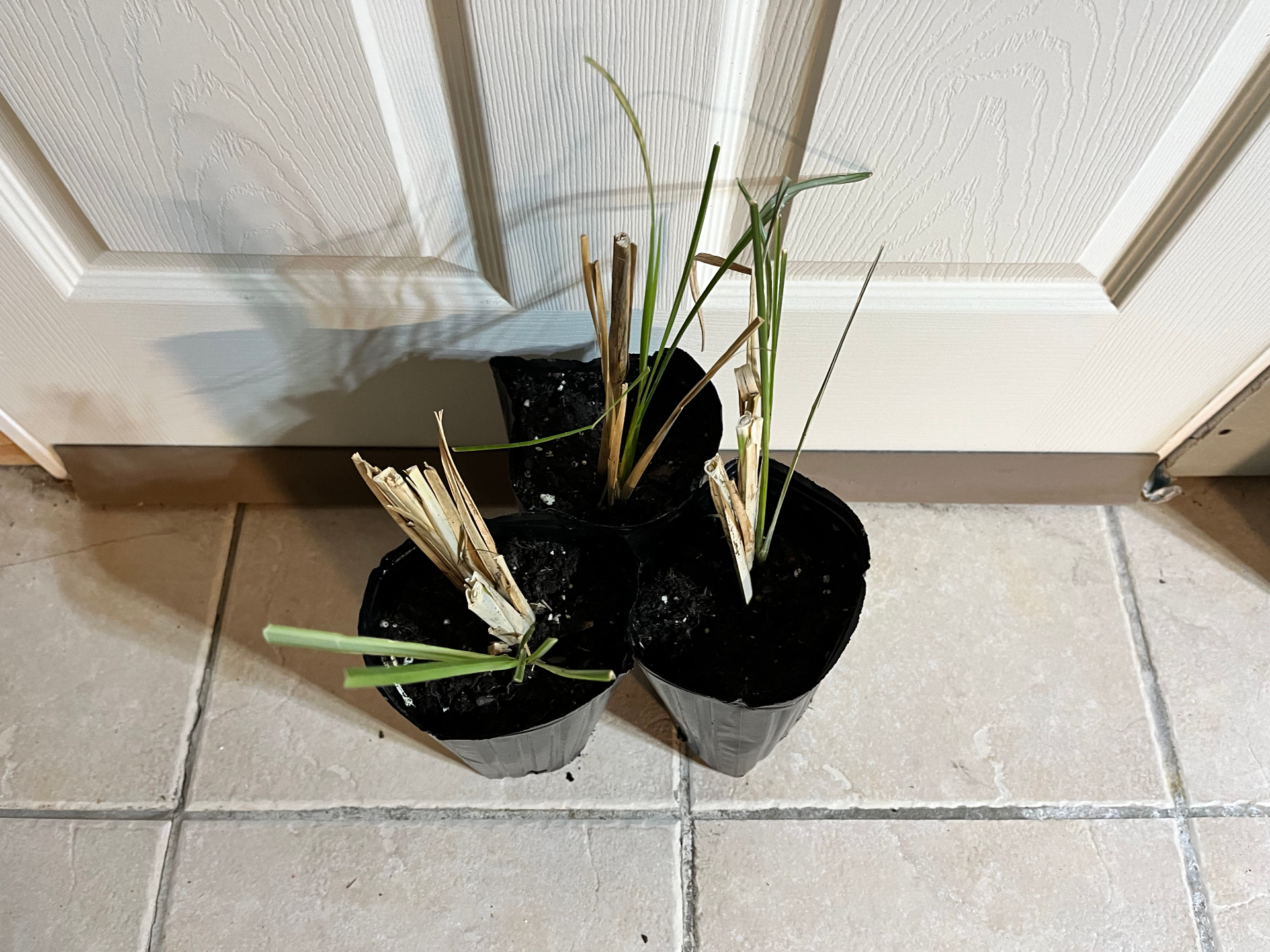
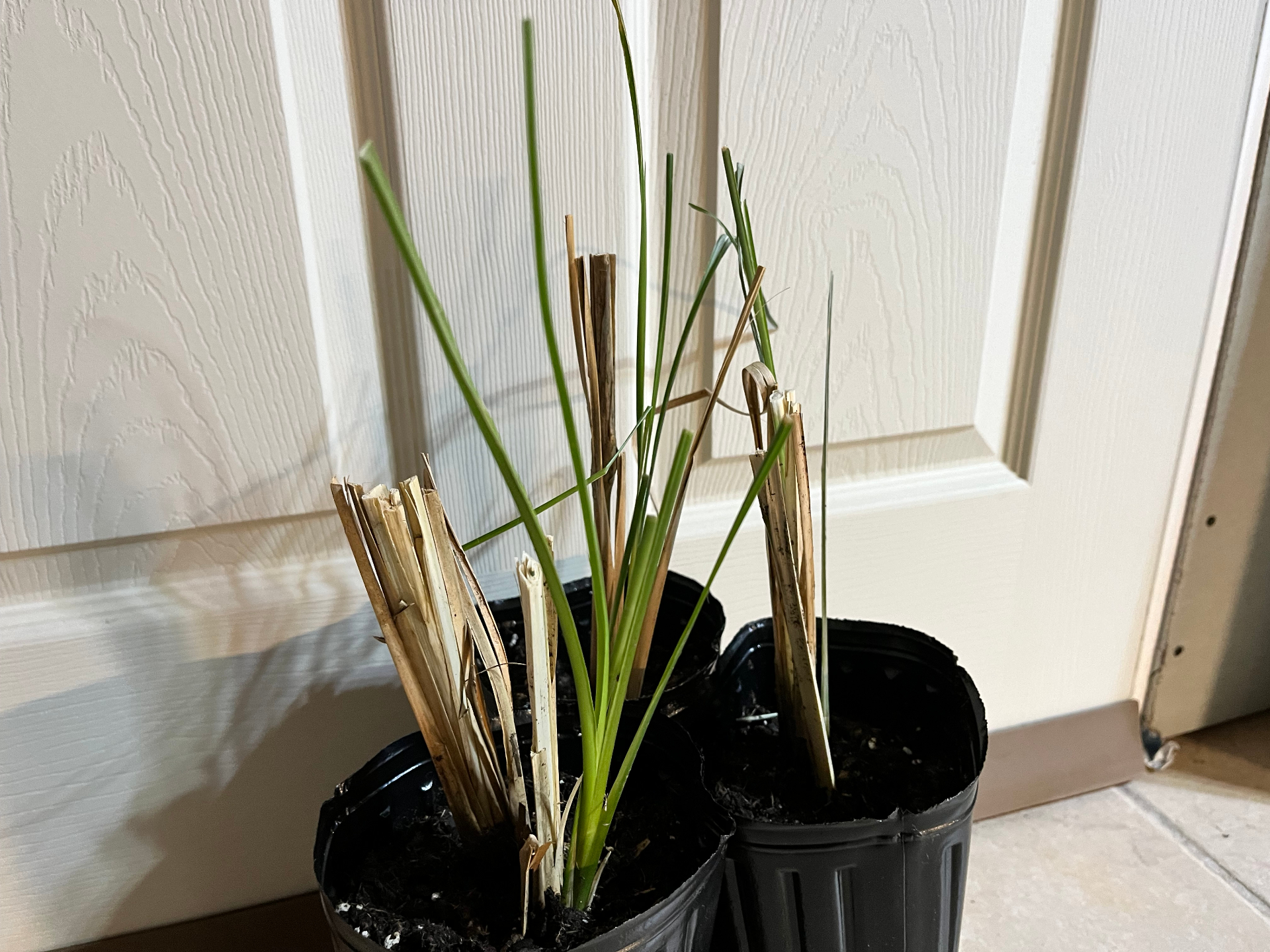
If you're growing vetiver indoors or carrying it through winter in a container, starting with a rooted 1-gallon plant gives you a head start over bare-root slips. Keep it in the brightest light you have, avoid cold drafts, and move it back outside once nights are reliably warm.
What to expect in year one
Vetiver grows down before it grows out. In year one, your slips will look modest above ground — maybe 18–24 inches of green growth — while putting most of their energy into a 4–6 foot root system. In year two the above-ground form catches up, and by year three you have mature clumps. This is normal. Don't dig anything up because it "looks slow" in summer one.
Frequently asked questions
How do you plant vetiver grass?
Soak the bare-root slips for an hour or two, dig a 6-inch hole, set the crown at soil level, backfill, firm the soil, and water in. Trim the green tops to about 6 inches. Don't fertilize at planting.
How far apart should you plant vetiver?
For an erosion-control hedge, plant slips 8–10 inches apart in a single row. For ornamental clumps, give each plant 3–4 feet. For a privacy screen, 3 feet on center is the sweet spot.
How long does vetiver take to grow?
Vetiver hedges knit together within one season. Mature ornamental form (3–6 feet tall, full fountaining shape) takes two to three seasons. Roots reach 4–6 feet in year one and 10–12 feet by year two or three.
Does vetiver grass need a lot of water?
Only during the first 4–6 weeks after planting. Once established, vetiver is remarkably drought-tolerant — the 10-foot root system finds its own moisture and the plant rarely needs supplemental watering.
Can vetiver grass grow in shade?
It tolerates partial shade but grows much more vigorously in full sun. In deep shade it survives but doesn't fill out into the dense clumps it forms in sun.
Is vetiver grass cold-hardy?
Yes in USDA zones 8–11. In zone 7 the roots can survive with heavy mulch but the plant often needs to be treated as an annual or grown in a movable container.