Scent & Uses · 4 min read
Khus, Khus Khus, and Vetiver: One Plant, Three Traditions
The same grass — Chrysopogon zizanioides — is called khus in India, vetiver in the West, and vattivellu in Tamil Nadu. Here's how each tradition uses it.
If you grew up in India, you know it as khus or khus khus. If you grew up in Tamil Nadu, it's vattivellu. If you grew up in the West and have read a perfume bottle, it's vetiver (or the older spelling, vetivert). And in a botany textbook, it's Chrysopogon zizanioides.
All the same plant. Different traditions, different uses, same roots.
Khus in India: cooling and craft
In North India, khus is associated above all with summer cooling. The traditional uses include:
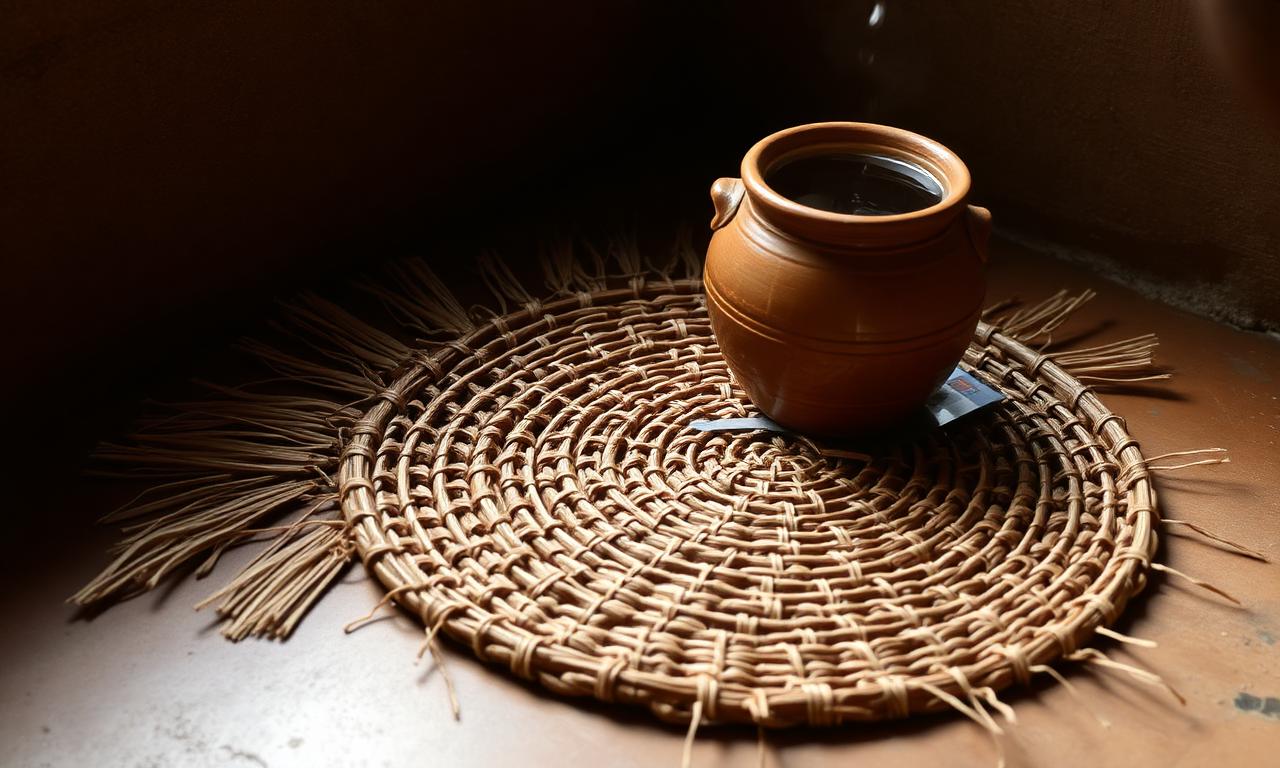
- Khus-tatti screens — woven mats of vetiver root hung in doorways and windows, then sprayed with water. As wind passes through the wet mats, evaporation cools the air and fills the house with the earthy-smoky scent of damp vetiver root. A pre-electric form of air conditioning that genuinely works.
- Khus sherbet and khus syrup — bright green cooling drinks flavored with vetiver root extract, served especially in the hot months across North India.
- Khus attar — vetiver oil distilled in the traditional Indian deg-bhapka method, often into sandalwood oil as a base. Used in Ayurveda and Indian perfumery for centuries.
The word khus khus is sometimes confused with poppy seeds, which share the name in some regions — but they're unrelated plants.
Vattivellu in Tamil Nadu
In Tamil Nadu and parts of South India, the same plant is called vattivellu (வட்டிவேல்லு) or vetiver, and is used for the same cooling and craft purposes as khus in the north — woven into mats, fans, and door screens. South Indian Ayurvedic medicine uses vetiver root in cooling decoctions and as a treatment for fevers and skin conditions.
The South Indian sterile cultivar is, in fact, the same plant that's been exported globally for the past 40 years for erosion control and landscape use. So when you buy "vetiver" from a US nursery, you're growing a plant whose ancestors were probably standing in a Tamil Nadu field a few generations ago.
Vetiver in the West: perfume and erosion control
The Western tradition picked up vetiver mostly through two channels:
- French perfumery — vetiver oil was being imported from Réunion and India by the 1800s, and is now a foundational base note in nearly every modern men's cologne. Guerlain's Vétiver (1959) made it a household name in fragrance.
- Landscape and erosion engineering — the World Bank Vetiver Network (now the Vetiver Network International), started in the 1980s, standardized the sterile cultivar and promoted it globally as a low-cost, non-invasive solution for soil conservation. It's now used on six continents.
In the US specifically, vetiver has been planted by the USDA Natural Resources Conservation Service for erosion control since the 1990s, and shows up increasingly in ornamental garden design as an alternative to invasive grasses like pampas and miscanthus.
Same plant, every time
Whatever you call it — khus, khus khus, vattivellu, vetiver, vetivert, Chrysopogon zizanioides — you're talking about one species with one set of properties: the deep root system, the cooling-earthy scent, the non-invasive clump.
If you're new to the plant, our primer on what vetiver is is the place to start. If you want to grow some, we ship bare-root slips from our farm in Georgia.
Frequently asked questions
Is khus the same as vetiver?
Yes. Khus is the Hindi/Urdu name for the same plant Western growers call vetiver — Chrysopogon zizanioides. Khus khus and vattivellu are also names for the same species.
What is khus khus?
Khus khus is another name for vetiver — the same tropical grass used for cooling mats, sherbet, attar (perfume), and erosion control. In some regions the term is also used for poppy seeds, which are an unrelated plant.
What is vattivellu?
Vattivellu is the Tamil name for vetiver. The South Indian sterile cultivar of vetiver is the same plant that's now grown around the world for landscaping and erosion control.
Why does vetiver have so many names?
Vetiver has been used across South Asia for centuries — for cooling mats, traditional medicine, and perfumery — so each language developed its own name. The Western name 'vetiver' comes from the French adaptation of the Tamil word vettiver.