Design · 5 min read
Vetiver vs Pampas vs Miscanthus: Which Ornamental Grass Should You Plant?
An honest comparison of three big ornamental grasses — vetiver, pampas, and miscanthus — covering size, invasiveness, hardiness, and best use.
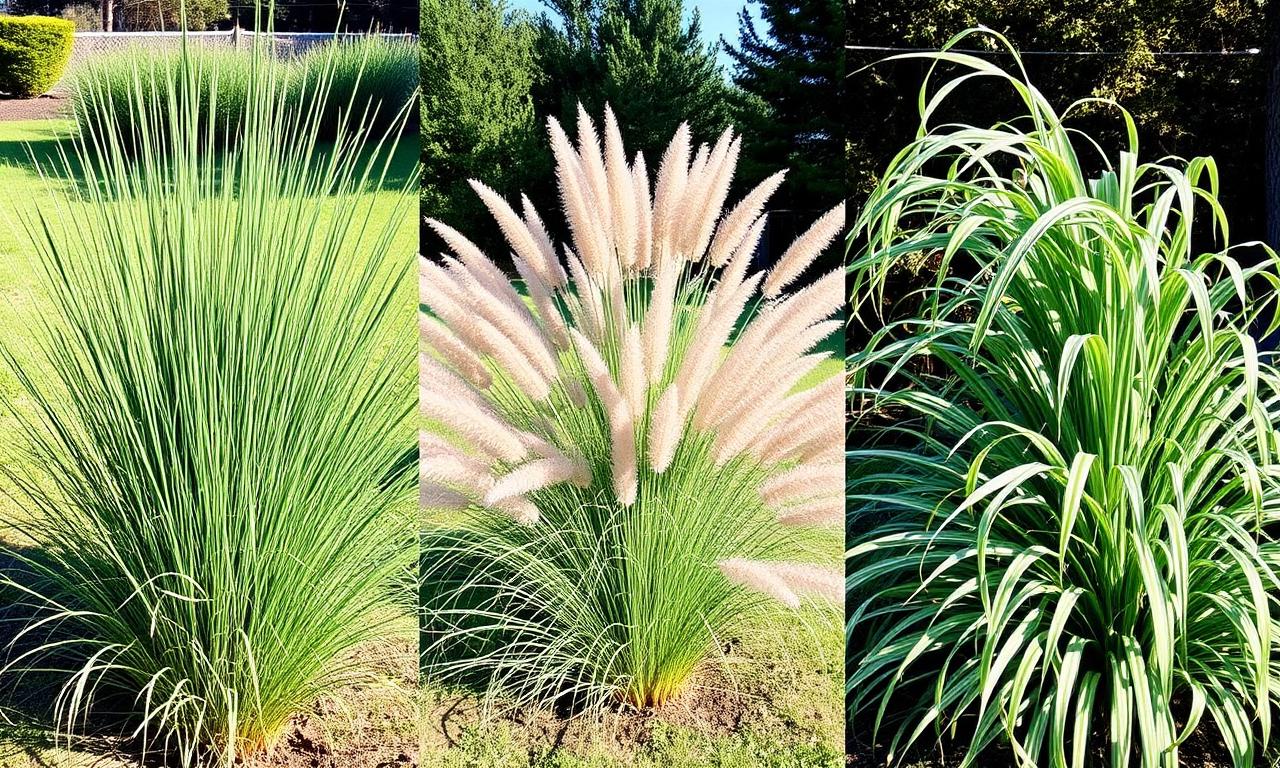
Three of the most-planted "big ornamental grasses" in American landscapes are vetiver, pampas grass, and miscanthus (Chinese silver grass). They look superficially similar — tall, fountaining, fine-bladed — but they behave very differently in the ground. Pick the wrong one and you'll spend years either fighting it or replacing it.
Here's the honest comparison from a grower who only sells one of them.
At a glance
| Feature | Vetiver | Pampas Grass | Miscanthus |
|---|---|---|---|
| Mature height | 4–6 ft | 6–10 ft | 4–8 ft |
| Mature spread | 2–3 ft | 4–6 ft | 3–5 ft |
| Flower plumes | Modest, purplish | Huge, white/pink | Showy, silver-pink |
| Invasive in US | No (sterile) | Yes (CA, parts of South) | Yes (Midwest, NE) |
| Cold hardiness | Zones 8–11 (roots hardy in 7 with mulch) | Zones 7–11 | Zones 4–9 |
| Drought tolerance | Excellent | Good | Moderate |
| Wet feet tolerance | Good | Poor | Moderate |
| Root depth | 10–12 ft | 2–4 ft | 1–3 ft |
| Erosion control | Excellent (the gold standard) | Poor | Poor |
| Maintenance | Low | Medium (cleanup) | Medium |
Vetiver
Best for: living hedges, erosion control on slopes, drought-tolerant ornamental clumps, anywhere a homeowner doesn't want to deal with a plant that spreads.
The case for it: the deepest root system of any grass in cultivation, completely non-invasive (sterile cultivar), takes drought and brief flooding, handles clay soil, doesn't need fertilizer, and looks beautiful as a fine-leaved fountain. Cut back once a year and otherwise leave alone.
The case against it: smaller flower plume than pampas, less cold-hardy than miscanthus, and harder to find at retail garden centers (most ship-to-order). Doesn't work as a year-round visual feature in zones 7 and colder.
Pampas grass
Best for: dramatic, large-scale visual statements in zones 7–11 where it isn't on the invasive list. Showpiece plumes for fall.
The case for it: those massive white plumes are genuinely spectacular, and pampas can hit 10 feet tall in a single season. As a single specimen plant in a coastal or warm-climate yard, it's hard to beat for theatrical effect.
The case against it: invasive in California and increasingly in the South. Self-seeds aggressively. The leaf blades have serrated edges that will cut you when you try to maintain it (wear long sleeves and leather gloves). It's also extremely flammable when dry — a serious consideration in fire-prone areas.
If you're in California, plant something else. If you're in the Southeast and considering pampas, consider vetiver as a non-invasive substitute.
Miscanthus (Chinese silver grass)
Best for: cold-climate ornamental gardens in zones 4–6 where vetiver isn't reliably hardy in the ground.
The case for it: cold-hardy down to zone 4, gorgeous silver-pink fall plumes, mature foliage moves beautifully in wind. Mainstay of perennial garden design.
The case against it: invasive in much of the Midwest and Northeast. Spreads both by seed and by rhizome. Several states are actively phasing it out of nursery sales. If you're in zone 7+, there are non-invasive alternatives (including vetiver) that give similar visual effect without the ecological cost.
Which should you plant?
A rough decision tree:
- Zone 8 or warmer, want a hedge or erosion control? → vetiver. It's literally what it's for.
- Zone 8 or warmer, want a single dramatic specimen? → vetiver if you want non-invasive; pampas only if it's not listed as invasive in your area and you can maintain it safely.
- Zone 7? → vetiver as an annual or in a movable container; or a non-invasive cultivar of miscanthus (look for sterile varieties).
- Zone 6 or colder? → miscanthus is your most reliable option, but check whether it's listed as invasive in your state before planting.
If you've narrowed in on vetiver, our shop page lists what we have available, and the growing guide walks through planting.
Frequently asked questions
Is vetiver better than pampas grass?
For most homeowners, yes — vetiver is non-invasive, drought-tolerant, has a deeper root system, and doesn't have the dangerous serrated leaves or fire-risk profile of pampas. Pampas has bigger flower plumes, which is the main reason to choose it over vetiver as a single ornamental specimen.
Can vetiver replace miscanthus?
In zones 8 and warmer, yes — vetiver gives a similar visual effect (tall, fountaining, fine-bladed grass) without miscanthus's invasiveness or seed-spread. In zone 6 and colder, miscanthus is more reliably hardy in the ground than vetiver.
Is pampas grass invasive?
Yes, in many US regions — especially coastal California, where it's on the official invasive species list, and increasingly in the Southeast. It self-seeds aggressively and crowds out native vegetation.
What's the difference between vetiver and lemongrass?
Lemongrass (Cymbopogon citratus) is a culinary herb with shallow roots and a citrus scent. Vetiver (Chrysopogon zizanioides) is a much taller landscape grass with a 10-foot root system and a smoky-earthy scent. They're related (both in the grass family) but used for completely different purposes.